
Working with a small room?
A compact base is only the start. Allow for overhanging beds, an approach route and space to reach the equipment for cleaning.
Find a useful tree position →Plan litter-tray locations →Choose cat furniture and everyday equipment that fits your cat, your space and your routine. Compare the options, plan the setup and make looking after it easier.
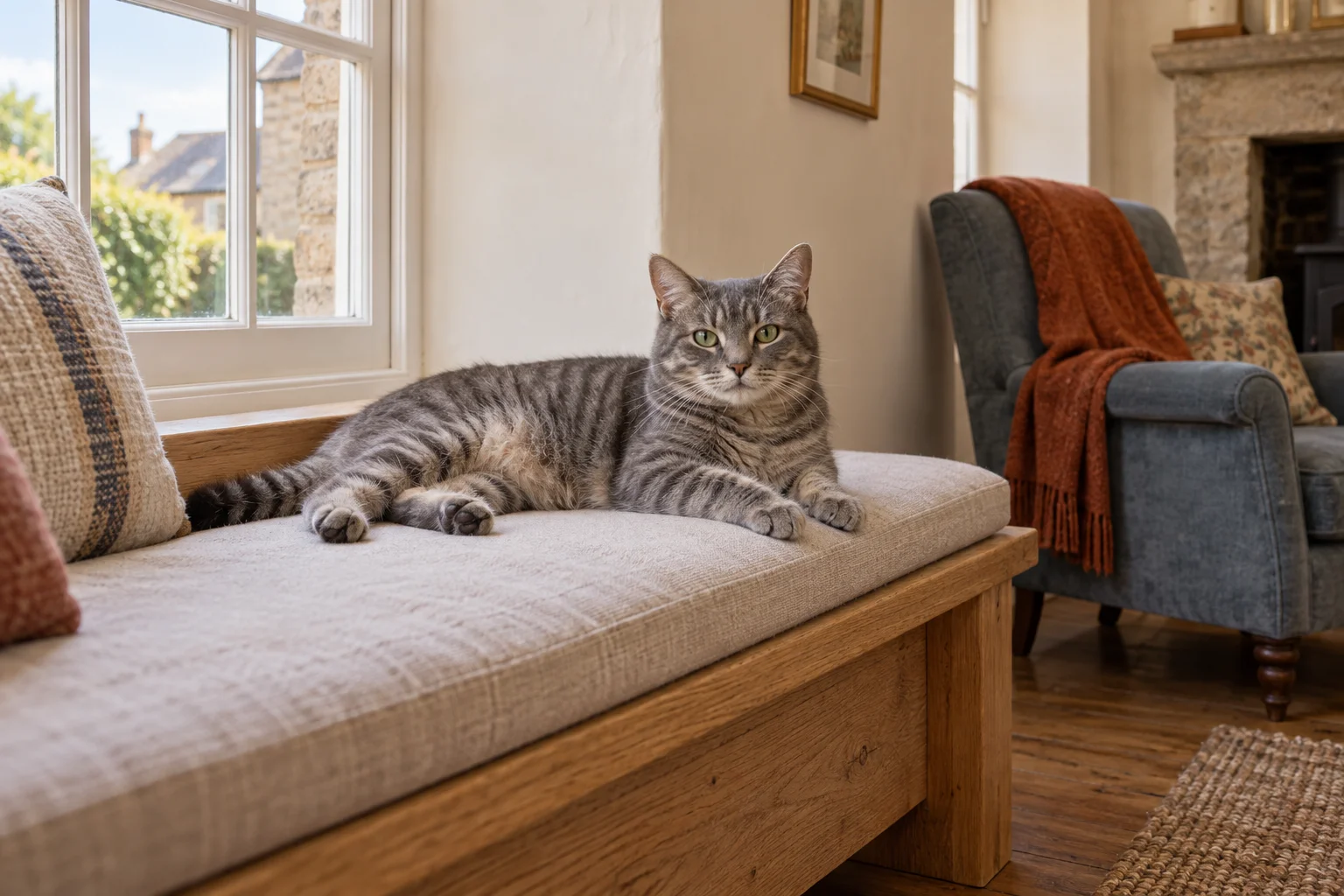
A broad, reachable perch can make a small room work better.
Eight ways to make home work better
Climb, scratch, rest, play, eat, drink and use the litter tray — plus a carrier for the journeys you need to make. Each category brings together buying advice, setup and care.

Climbing, resting and room fit

Posts, pads and places to stretch

Quiet corners and washable comfort

More to do with the space you have

Timed meals and individual access

Bowls, filters and cleaning access

Easy access and practical tray setups

Sturdy, accessible everyday transport
Buying guides
A useful shortlist explains the compromises: the floor space a tree occupies, the parts you can wash and the opening your cat can comfortably use.

Climbing & room fit
Compare the full footprint, usable resting space and routes between levels.
Read the comparison
Scratching & stretching
Look beyond height to the scratching surface, base and position in the room.
Read the comparison
Resting & easy care
Check which parts wash, how they dry and whether the bed suits your cat’s sleeping shape.
Read the comparison
Drinking & daily upkeep
Compare access to the pump, removable parts and ongoing filter needs.
Read the comparison
Toileting & usable space
Separate inside-floor space, entry height and the outline that needs to fit at home.
Read the comparison
Transport & access
Choose a usable opening, secure closures and enough room for your individual cat.
Read the comparisonA little help with the decision
Use our tools to narrow a feeding choice or explore a fountain’s running costs.

Separate a timed opening from protected access to one cat’s meal.
Use the feeder selector →
Adjust electricity and filter assumptions to see the ongoing cost.
Open the cost calculator →The cat. The room. The routine.
A compact base is only the start. Allow for overhanging beds, an approach route and space to reach the equipment for cleaning.
Find a useful tree position →Plan litter-tray locations →Look at actual steps, bed edges and turning space. A new difficulty jumping or getting into a tray needs your vet’s advice.
Compare low-entry beds →Compare low-entry litter trays →Separate places to eat, rest and get away give cats more choice. A larger shared piece does not create another access route on its own.
Compare trees for multiple cats →Separate timing from meal access →Equipment in context
Three different jobs around the home. Compare each option with the alternatives in its full guide, including fit, care and the details to check.
Upright scratching
A tall, straightforward post with a woven sisal surface and a broad square base. It is a useful option for a cat that chooses upright scratching and needs room to stretch, without adding a whole climbing tower.
Check: Needs assembly and a flat, steady position
Enclosed resting
A curved, rigid hideaway with two entrances, a memory-foam cushion and a replaceable sisal scratching mat. It suits a cat that chooses an enclosed resting place, while leaving another route out.
Check: Outer measurements do not show usable sleeping space
Paw-based puzzle
Five removable tubes hold dry treats or kibble for your cat to retrieve with a paw. Begin with an easy-to-reach reward and watch whether the activity appeals before making it more challenging.
Check: Treats still count towards the normal feeding plan
Already have the equipment?
Good ownership starts with a setup your cat can use and a routine you can keep. Our practical guides cover the parts you handle every day as well as the small details that are easy to miss.
Match fountain filters, feeder bowls, scratching posts and carrier fittings to the exact model you own.
Find parts & compatibility advice →Reach the pump and small channels as well as the visible bowl.
Plan scooping, a full wash and a dry tray ready to use again.
Build a manageable toy rotation around what your cat actually enjoys.
Check the carrier, familiar bedding and the journey before you leave.
We look at usable space, entry height, cleaning access and replacement parts, explaining where an option may fall short.
What to compare before buying →Our comparisons draw on manufacturer information and established cat-welfare guidance. They are researched recommendations, with sources and limitations explained.
How we use sources →